
Starting a five-a-side from scratch
From "we should have a game" to ten people every week: starting a five-a-side at work, among school parents, at uni or with old mates.
Updated November 2026
Every weekly game started with somebody saying "we should have a game" and, for once, somebody actually doing something about it. If that's you, here's how to get from the idea to ten people turning up every week: who to ask, what to send, how to book, and how to get through weeks two to six, where a lot of new games quietly die.
In short
- Ask more people than you need. Fifteen keen replies turn into ten on the night.
- Send one clear message with the day, time, place, cost and standard. There's one to copy below.
- Book three or four weeks to start, at the same time each week, then move to a block once it's working.
- Mixed ability is fine. Fair teams and a friendly tone matter far more than everyone being good.
- Protect weeks two to six. Keep the date fixed, ask early, and only cancel if you have to.
Who to ask
Most games grow out of one group of people who already see each other. Start there, then widen it.
- Work. A message on the staff channel or a word in the kitchen. Everyone's in the same place and can talk about it on Monday, and it's good for people new to the town. A slot near the office straight after work means nobody has to go home first.
- School-gate parents. They see each other twice a day and often haven't played for years. Ask at a birthday party, or in the class chat if that's not frowned upon. Weekend mornings or a late slot after bedtime work best.
- Uni. Halls, courses and societies are full of people who'd play if someone sorted it. Keep it cheap: the campus sports centre may be the best value around.
- Old mates. The group from school, the old Sunday league team, the lot from your last job. A weekly game is one of the easiest ways to actually see the people you keep saying you'll catch up with. That's what why the weekly game matters is about.
Ask each person to bring one more. To get ten on the night, aim for fifteen or more names: some will never come, some will come once, and that's normal.
The first message
Make it easy to say yes. Every detail up front, so nobody has to ask, and make it sound like a laugh rather than a commitment.
Copy this into the group
Fancy a weekly five-a-side? I'm thinking Tuesdays, 7–8pm, at [venue], starting [date]. It's about £7 each, all abilities, nothing serious: just a run about and maybe a pint after. Bring a mate if they're up for it. Reply if you're in for the first one and I'll book it.
Then message the "maybes" one by one. A personal message gets a firmer answer than another post in the group.
Booking the first few weeks
Once ten or so say yes, book. Don't wait for twelve definites; you'll never get them.
- Pick one slot and keep it. "Tuesdays at 7" sticks. "Some time next week" doesn't.
- Book three or four weeks, not one. It shows you mean it, and gives the game time to settle.
- Collect the money from the start, even if it's just the first week. It's much harder to start charging later. Collecting the money has a policy you can copy.
- Go to a block booking after a few full weeks. Booking a pitch has the questions to ask.
Bring bibs and a ball to the first game, even if the centre says it has them. The first night is when things go wrong. The organiser's kit bag has the rest.
Mixed ability
A new group always has a mix: the one who played semi-pro, the one who hasn't kicked a ball since school, and everyone in between. That's normal. What matters is that the games are close and nobody feels like a passenger.
- Pick the teams fairly from week one. Never let the two best players pick, and never play mates against mates. See how to pick fair teams.
- Set the tone. No slide tackles, no shouting at team-mates, and the better players pass to everyone. Say it in the first message if you have to.
- Agree a few house rules before kick-off: nobody in the area, head height, what happens off the boards. The Laws of the Game cover the rest.
Weeks two to six
The first game is easy: it's new and everyone's curious. Weeks two to six are where it's won or lost. The novelty wears off, people find excuses, and one short week makes the next one shakier still.
- Ask early. Ask who's in as soon as the last game finishes, and set a deadline for replies.
- Keep the date fixed. Moving it to suit one person tells everyone it's optional.
- Don't cancel if you've got eight. Play four against four, or with a magic man: odd numbers has the formats. A short week still keeps the habit.
- Talk about it in between. The goal of the week, who was robbed, who's top of the table. It keeps people thinking about Tuesday.
- Get a second organiser early, so a game never gets missed because you're ill.
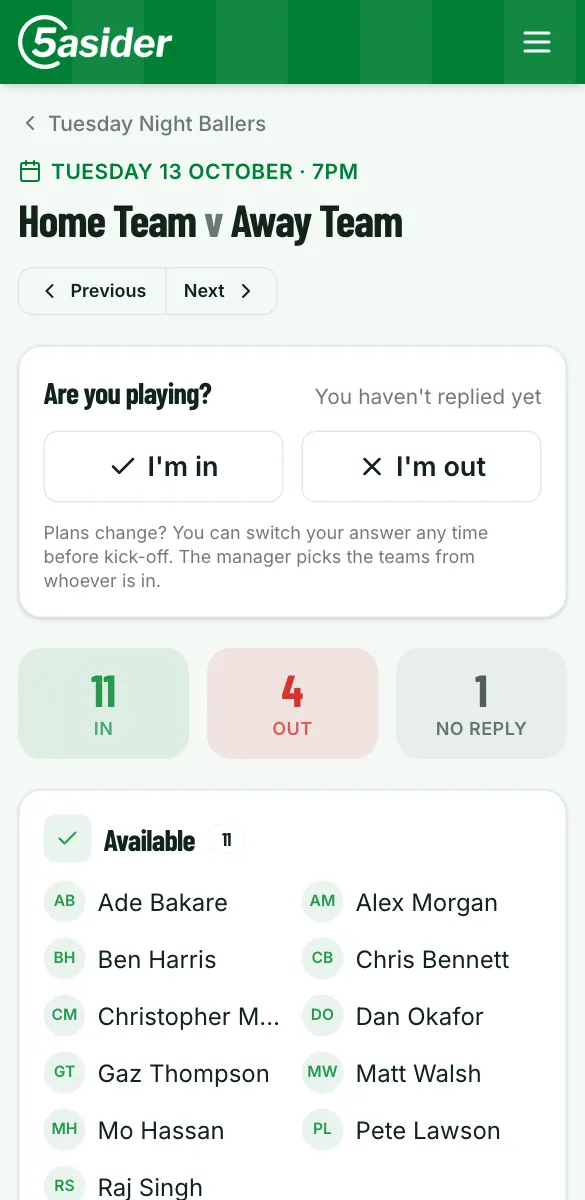
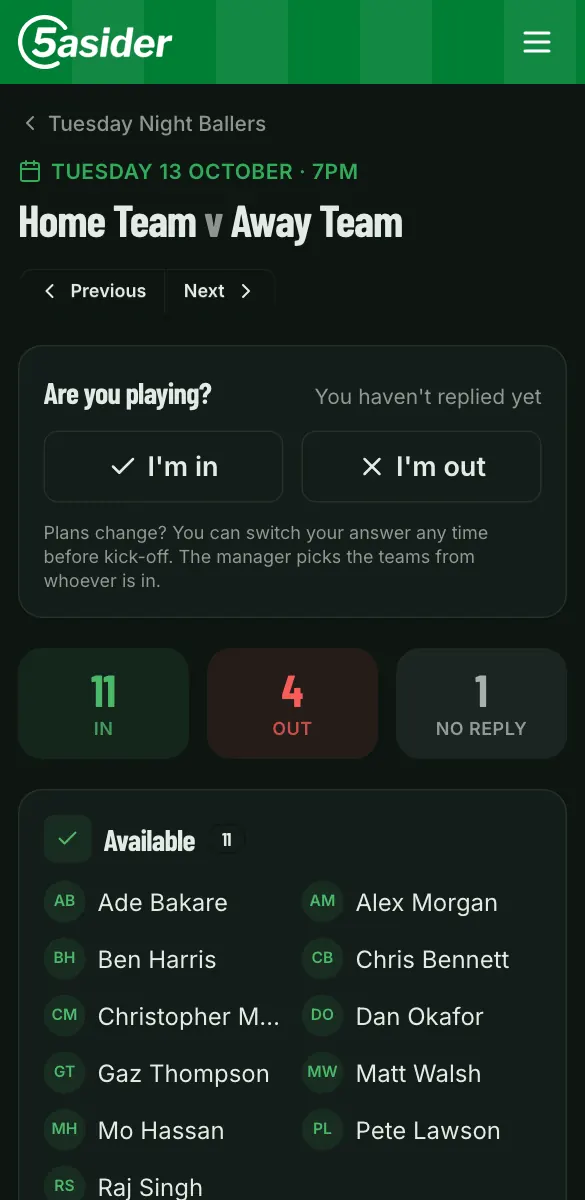
This is where 5asider helps. Create a squad, paste in a list of names or email addresses, and add the first game. Everyone gets an email with a Set your status button and says they're in or out, with no need to log in. The game page shows who you still need to nudge.
Put the score in after each game and the league table starts from week one, which gives everyone a reason to come back. It's free and there's nothing to install.
By week six, if you're regularly getting ten, you've got a weekly game. Organising a weekly five-a-side covers running it from there.
Questions people ask
How do I start a five-a-side group?
Ask more people than you need, send one clear message with the day, time, place and cost, book three or four weeks at the same slot, and keep it going through the first few weeks.
How many people do I need to start a five-a-side?
Ten on the night, but start with a list of fifteen or more names. Some won't make it and some will only come once.
What if nobody's very good?
It doesn't matter. Casual five-a-side is about the run about and the laugh. Keep the teams fair and the games will be close.
Where can I find more players once it's going?
Ask your players to bring mates, and see our guide on finding players.
Sources
- The Laws of the Game, IFAB
The rest comes from Martin's own games at The Tuesdays FC: who to ask, the first message, booking the first few weeks, and getting through weeks two to six.
Advertisement
Start your game.
Create a squad, add your players and your first game in a few minutes. Free, nothing to install, and players reply from the email.